A decision order
Start by naming the thing you want to see: the Seine, the Sydney Opera House, the harbour as a whole, or a particular part of the skyline. Then decide what counts as enough: a direct view, a side angle, a partial glimpse, or a landmark visible only from one corner of the window. This gives you a test for comparing room descriptions. A hotel’s address near the water, a rooftop photograph or a city panorama cannot answer what a guest in one assigned room will see.
Next, separate four requests that are often blended together: a view target, a balcony, a room category that names the view, and a preference such as a high floor. The booked category is the product recorded in the reservation; the exact room assignment is the physical room selected within that category. A note asking for a high floor does not change the category you bought or reserve a particular room. The table keeps these questions apart so that each can be checked against the official wording and your confirmation.
| Question | What it describes | What to verify |
|---|---|---|
| View target | Landmark or direction you want | Separate direct, partial and directional wording |
| Balcony | Private outdoor space | A feature listed separately from the view |
| Booked category | The product purchased | Exact room name including the view term |
| Preference request | A wish such as high floor or orientation | A note for the hotel’s allocation team |
| Assigned room / event | Physical room and date-specific sightline | Category and allocation are separate |
Read the view name
A named target such as “Seine View” or “Opera View” is more specific than “city view,” but the label still needs to be read in context. Look for what the hotel says is visible, whether the view is direct or partial, and whether the description refers to a direction rather than a landmark. “Harbour-facing,” “harbour glimpse” and “uninterrupted Opera House view” are different claims. Do not assume that a view label promises a particular floor, angle, distance, window position or unobstructed sightline unless the current room description actually says so.
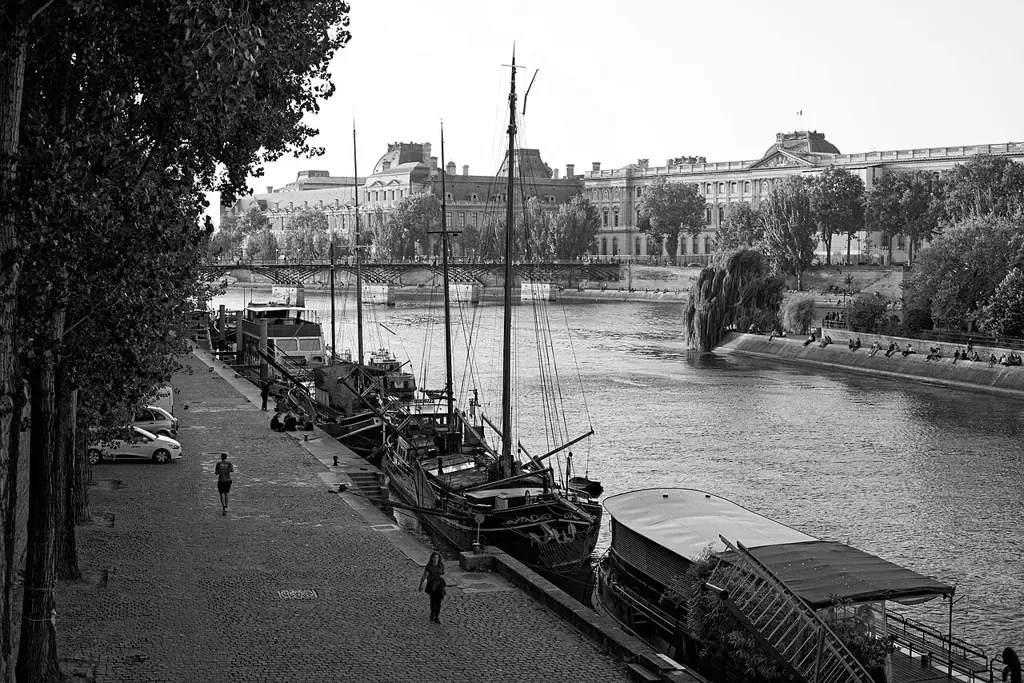
A photograph of a neighbourhood can orient you to the riverbank or harbour, but it cannot show the height, direction or obstructions outside a future guest’s window. The Quai de Conti image here is a public streetscape photograph, not a view from Citadines. Likewise, a hotel exterior beside the water does not establish that every room faces the water. Treat contextual photographs as illustrations of place and read the room category text for what is being sold.
Balcony and outlook
A balcony describes outdoor space attached to a room; a view describes what can be seen from a particular position. Booking pages may list these as separate features, and one does not automatically establish the other. A balcony might face a street, reserve, neighbouring building or a different part of the harbour. A large window can provide a view without any private outdoor area. Check the exact category description for both items and avoid filling in missing information from a photograph or the hotel’s location.
If stepping outside matters, confirm that the balcony is included with the category shown in your booking, rather than mentioned only for some rooms or suites. Ask what the balcony faces and whether the size or placement varies by room. Even a category with a balcony may leave the exact room number and angle to the hotel’s allocation process. Record the answer accurately: “balcony included in this category” is not the same as “this balcony has a direct Opera House view.”
Booked category and request
Booking a named category is different from requesting a preferred room. If a view is essential, the selectable rate or room name should explicitly include the target, and that same wording should appear in the reservation confirmation. “High floor,” “away from the lift” and “front-facing” are often preferences that can be added as notes. A request being received is not proof that it was accepted, and an accepted preference may still be subject to availability unless the hotel confirms otherwise in writing.
The confirmation usually identifies a category, not a room number. A hotel may allocate one of several physical rooms within that category at check-in or before arrival. This means that a category can describe a promised feature while leaving the precise angle, floor or neighbouring obstruction unspecified. Before paying, ask the hotel or seller a narrow question about the exact category and the feature that matters to you. Keep the reply with the booking details and check cancellation conditions in case the wording does not match your needs.
Event-date sightlines
On an event date, the usual room description does not settle what a guest will see. Temporary structures or crowd routes can block some windows and balconies, and the room’s position and eventual assignment also matter. A category name such as “Opera View” describes the hotel’s stated ordinary outlook; it does not promise that every part of a particular event will be visible from every assigned room.
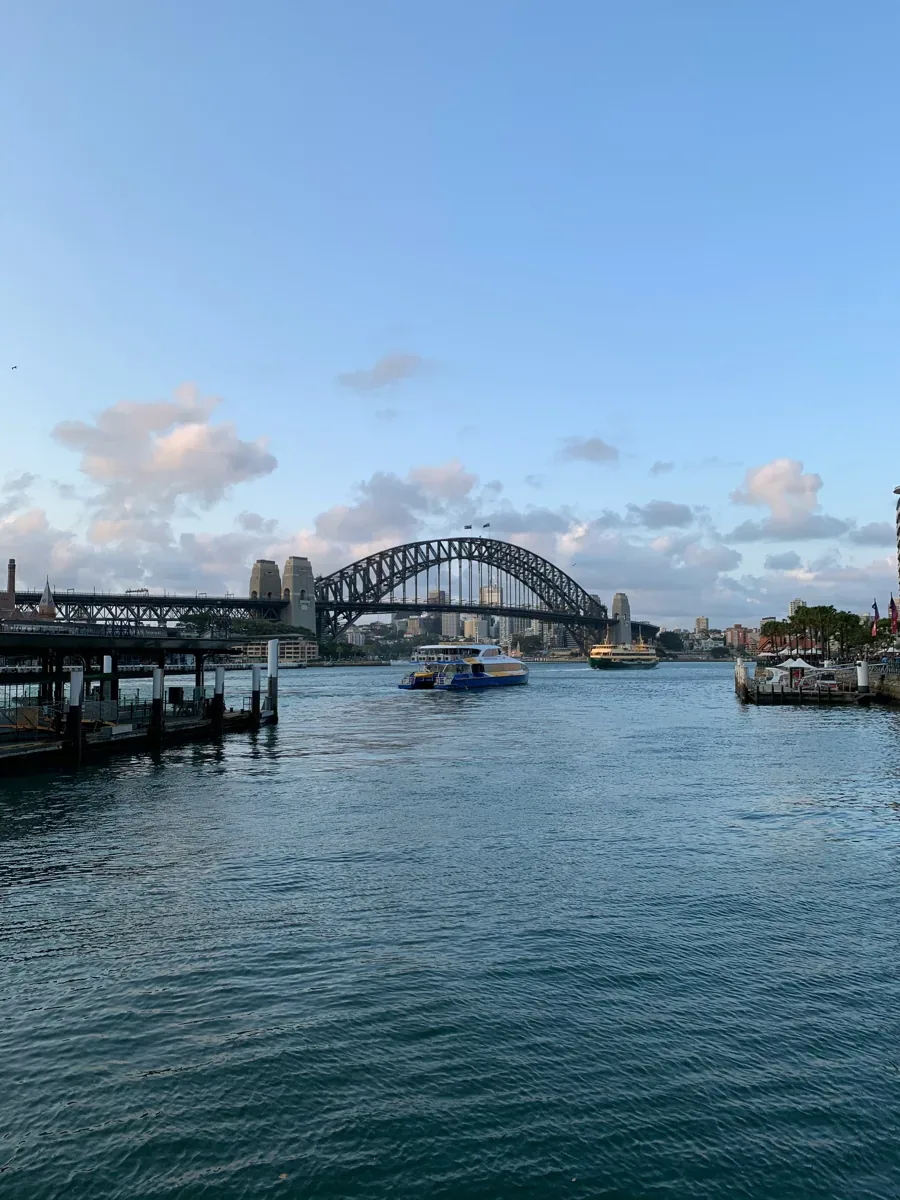
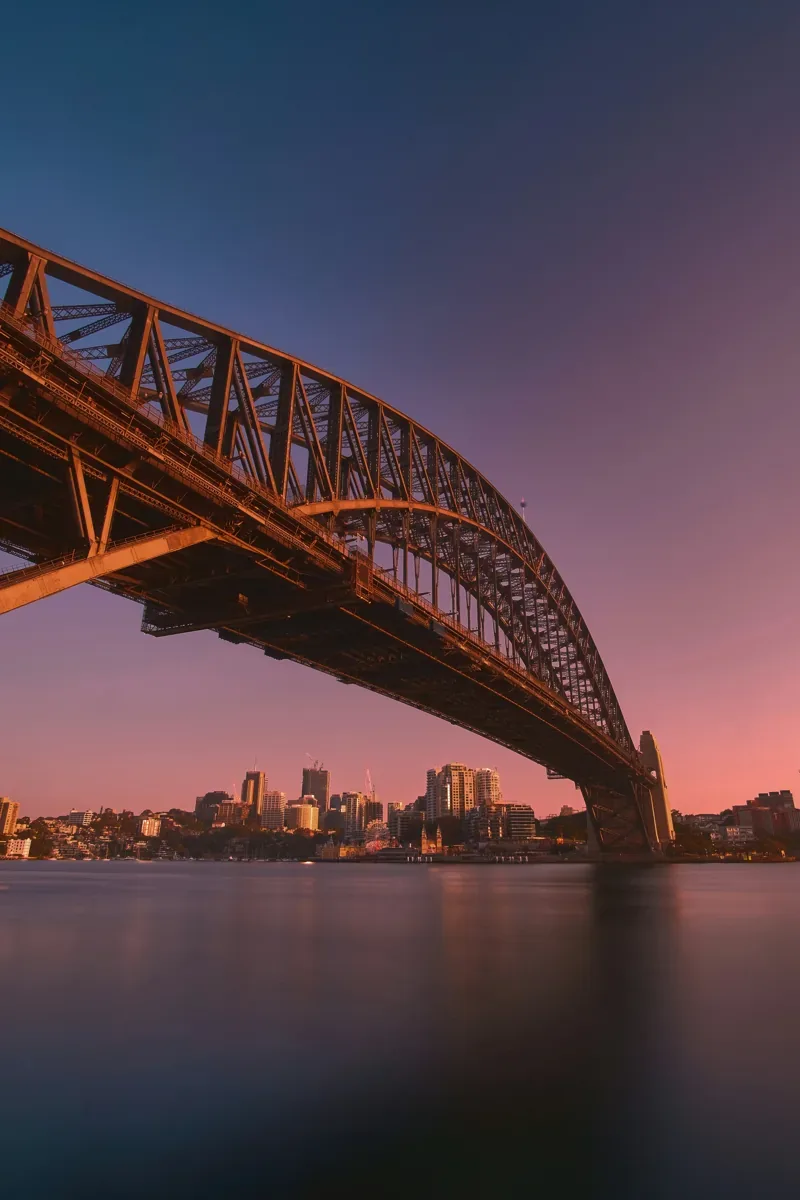
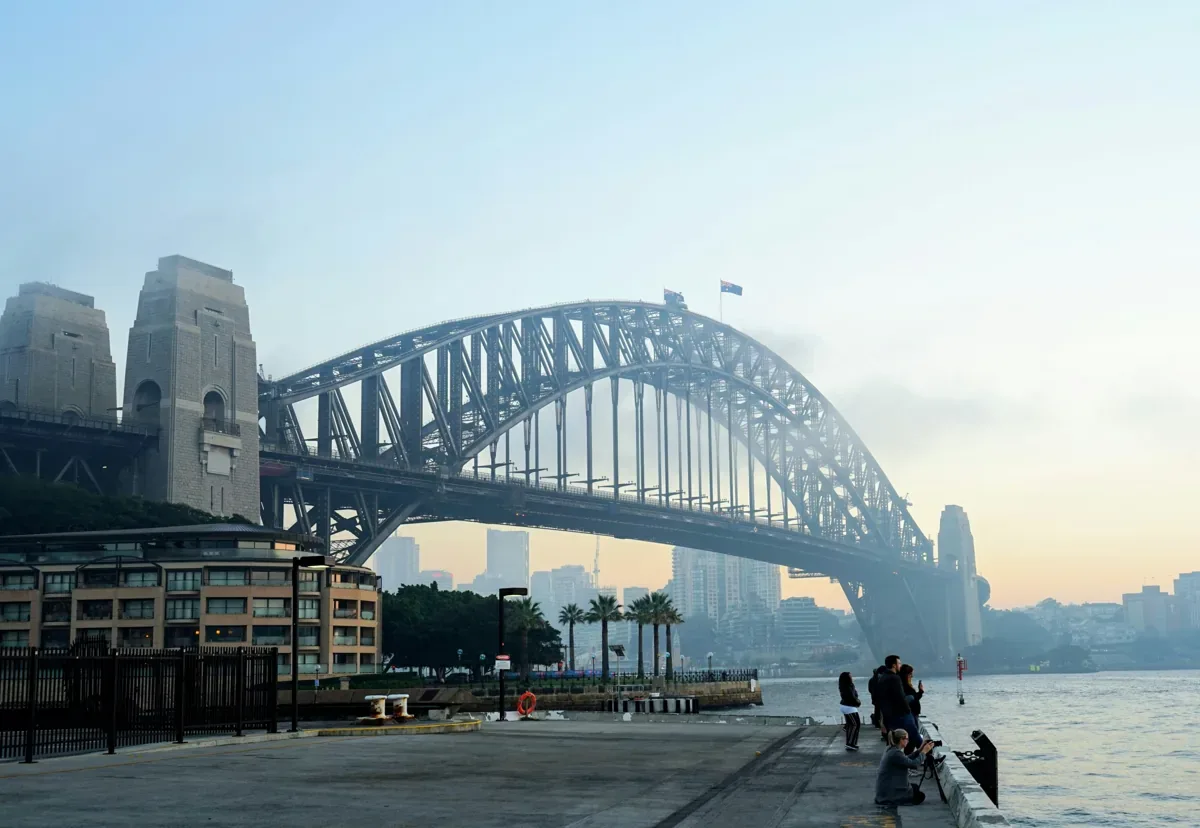
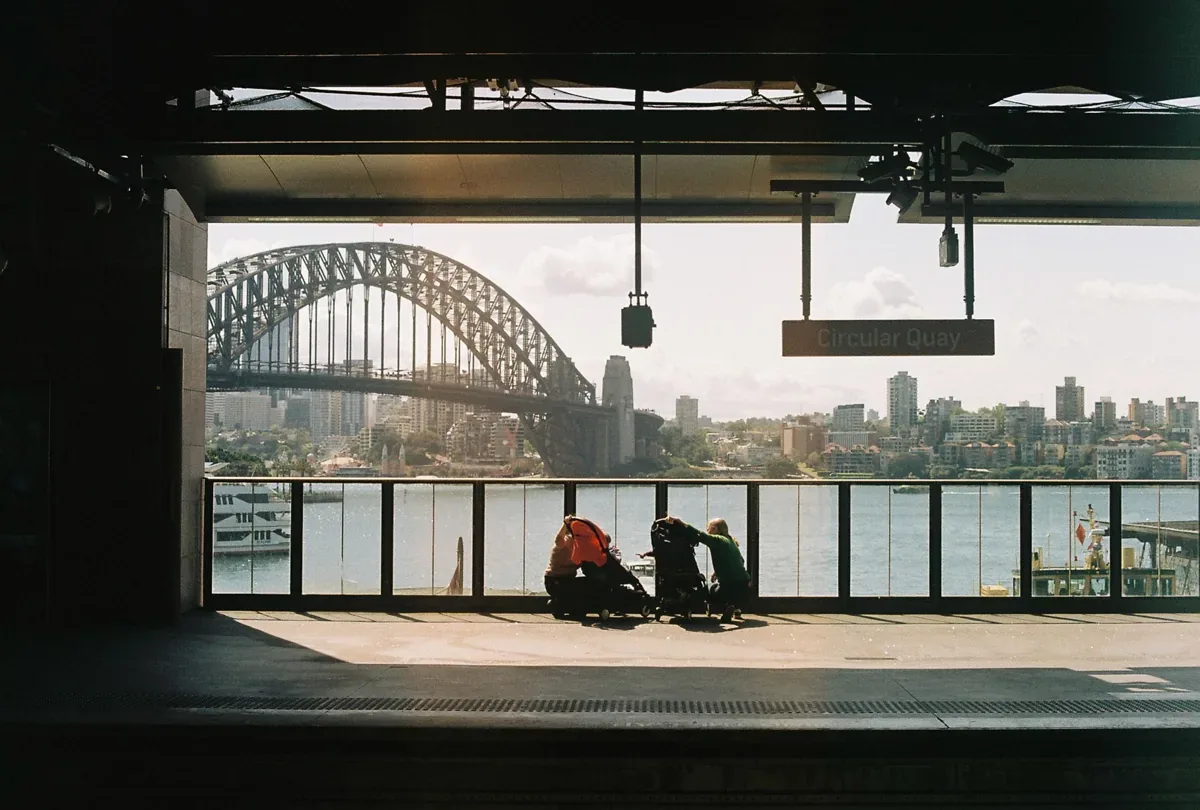
Check the detailed guide for Sydney New Year’s Eve minimum stays, event-view conditions, transport and hotel access.
The Paris Citadines example
Citadines lists categories with and without Seine View as separate room types. The table pairs each full official name with its stated area. If a room name does not mention a view, that does not establish that the room has no view; check the full listing for your dates.
| Official room name | Stated area | View wording in the name |
|---|---|---|
| Studio | 23 m² | No view term in the name |
| Studio Deluxe | 23 m² | No view term in the name |
| Studio Seine View | 27 m² | “Seine View” in the name |
| 1-Bedroom Apartment | 42 m² | No view term in the name |
| 1-Bedroom Apartment with Seine View | 42 m² | “Seine View” in the name |
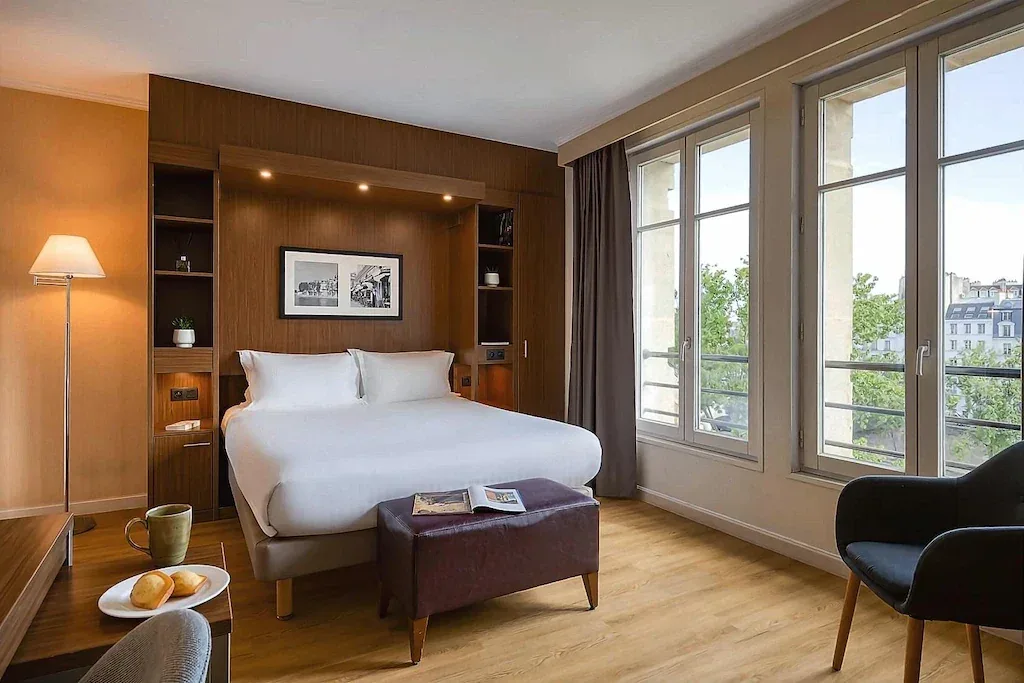
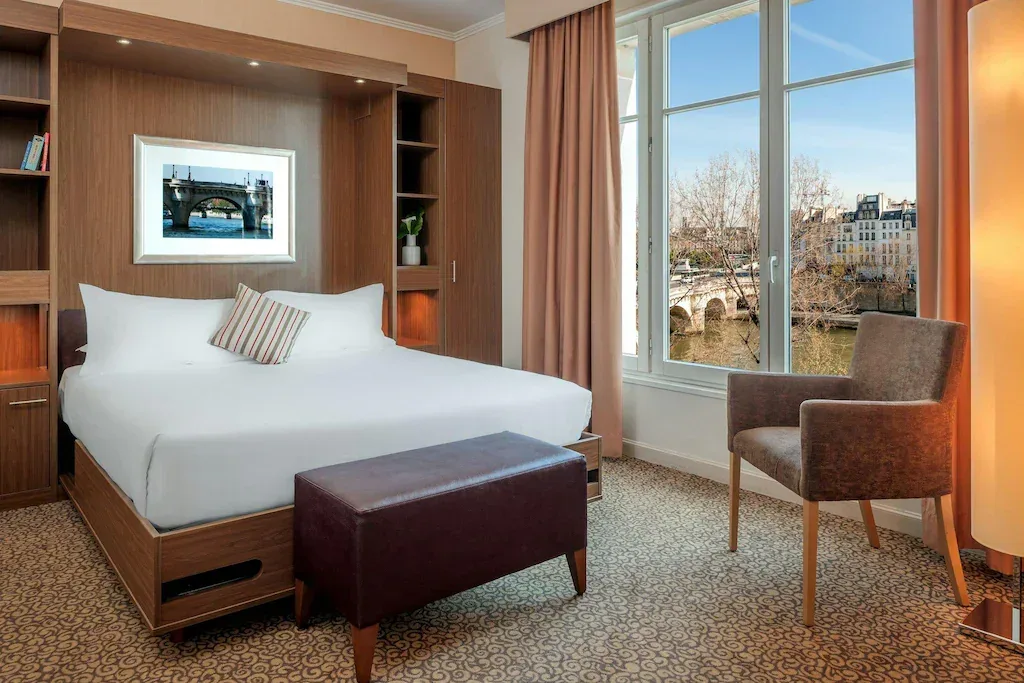
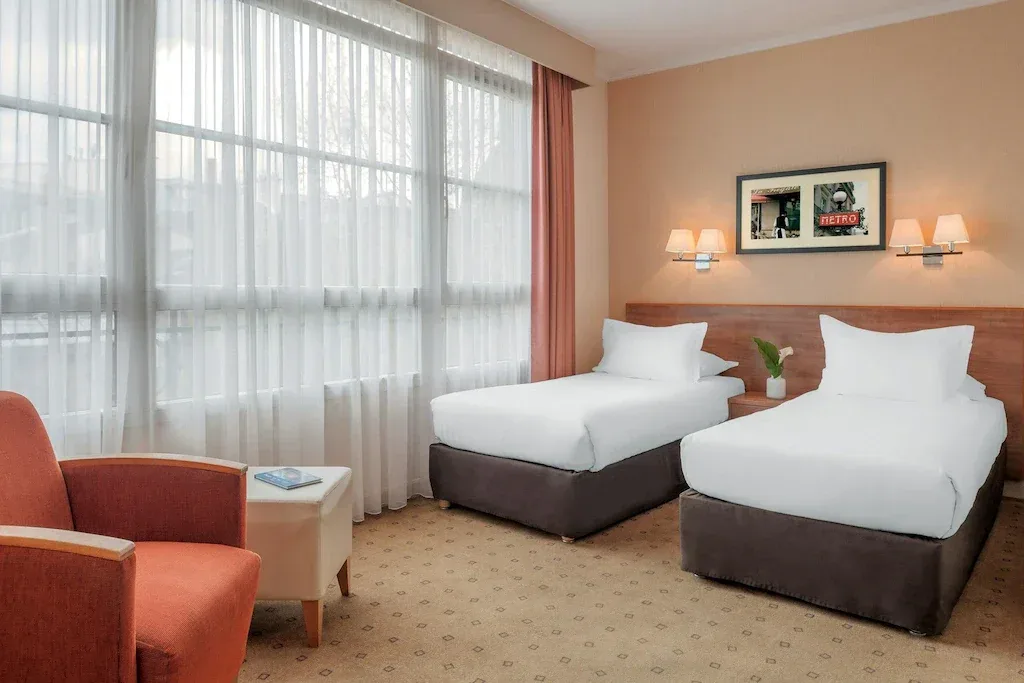
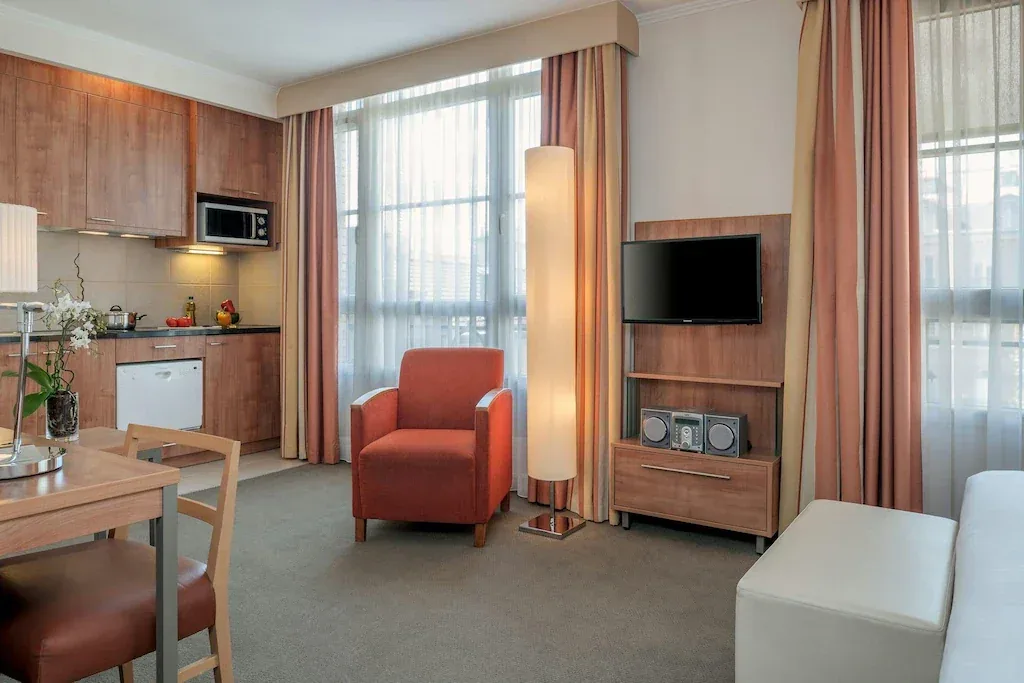
The first two gallery images are labeled Studio Seine View, and the third is labeled 1-Bedroom Apartment with Seine View. One Studio image shows the Seine through the guestroom window. These are gallery examples of the named categories, not confirmation of the room assigned to a booking or of a particular view angle.
This Paris example is useful because the area figures stay the same while the view name changes within the one-bedroom pair. That makes it easier to see why size, layout and outlook should be checked as separate attributes. The official room list does not establish the exact floor, window angle or view from a particular unit. This guide also makes no occupancy claim for the Citadines categories. Confirm guest capacity and any other booking conditions for your own dates rather than carrying them over from a photograph or an older listing.
The Sydney Park Hyatt example
Park Hyatt Sydney’s official list separates bed configuration, area, balcony and outlook by room category. The table puts the full names alongside the hotel’s stated descriptions.
| Official room name | Area | Balcony | Official outlook |
|---|---|---|---|
| 1 King Bed Deluxe | 75 m² | Two private balconies | Overlooks Hickson Road Reserve or Campbell’s Stores; no Sydney Harbour view. |
| 2 Double Bed Deluxe | 75 m² | Two private balconies | Ground-floor rooms; the hotel describes glimpses of Sydney Harbour. |
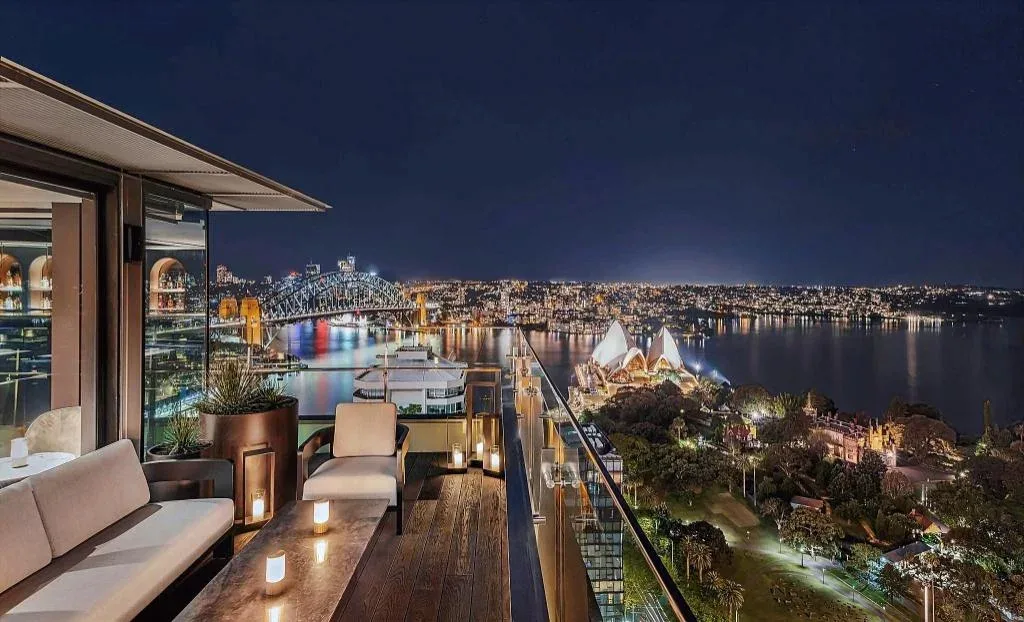
| 1 King Bed With Opera View | 40 m² | Private balcony | Direct, uninterrupted views of the Sydney Opera House and Sydney Harbour. |
| 2 Twin Beds With Opera View | 40 m² | Private balcony | Direct, uninterrupted views of the Sydney Opera House and Sydney Harbour. |
| 1 King Bed With Opera View Deluxe | 75 m² | Two private balconies | Direct views of the Sydney Opera House and Sydney Harbour. |
Both 75 m² Deluxe categories have two balconies, but their outlooks differ. King Deluxe has no Sydney Harbour view, while the 2 Double Bed Deluxe is on the ground floor and the hotel describes harbour glimpses. The 40 m² Opera View rooms and the 75 m² Opera View Deluxe are separate categories too, so compare the full booked name.
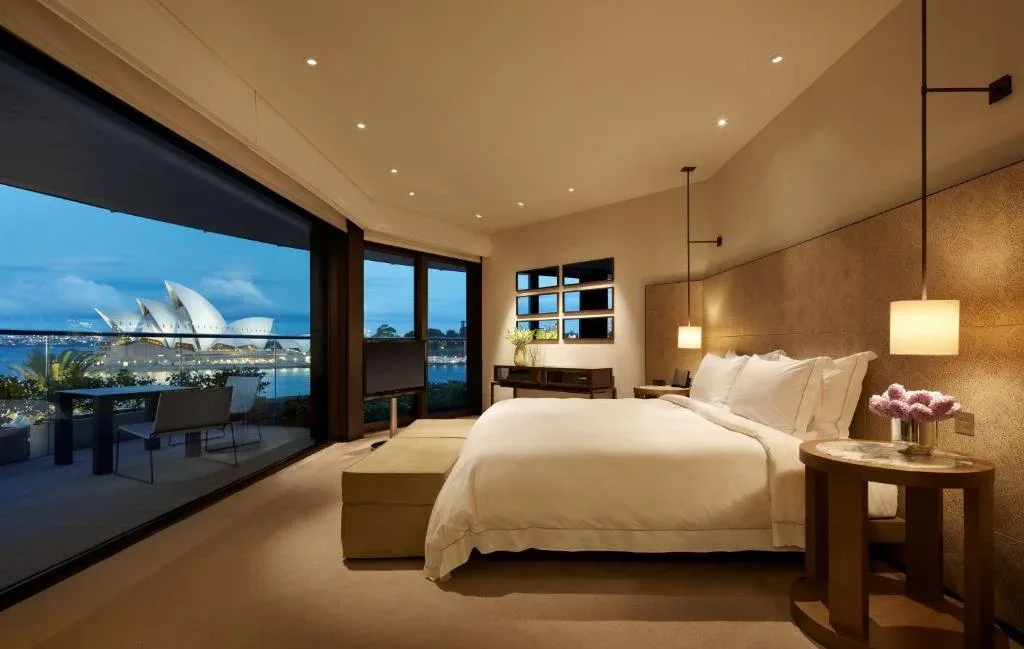
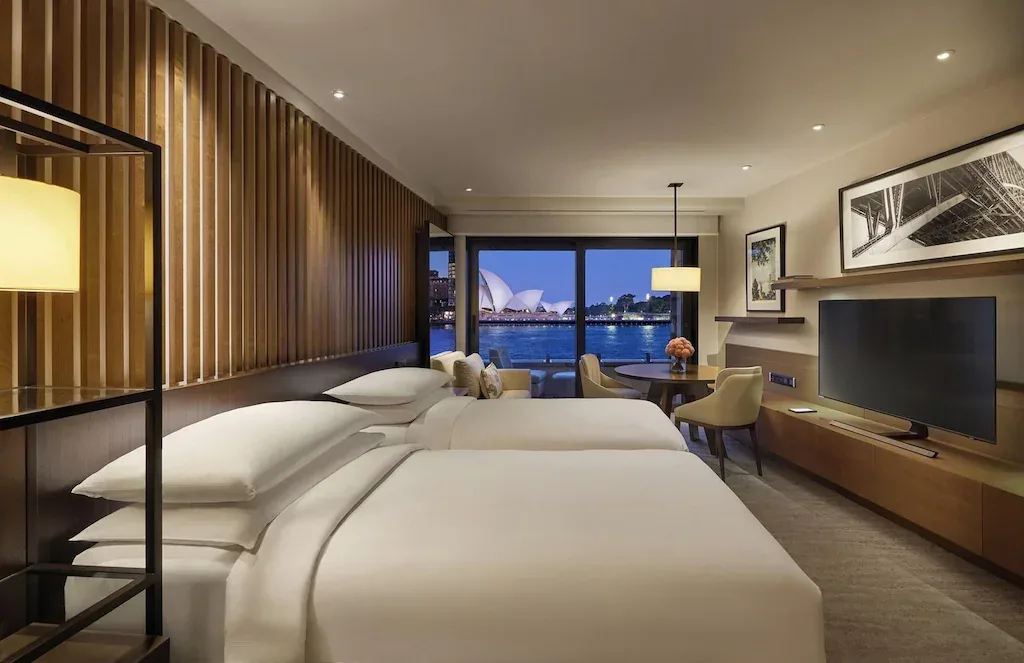
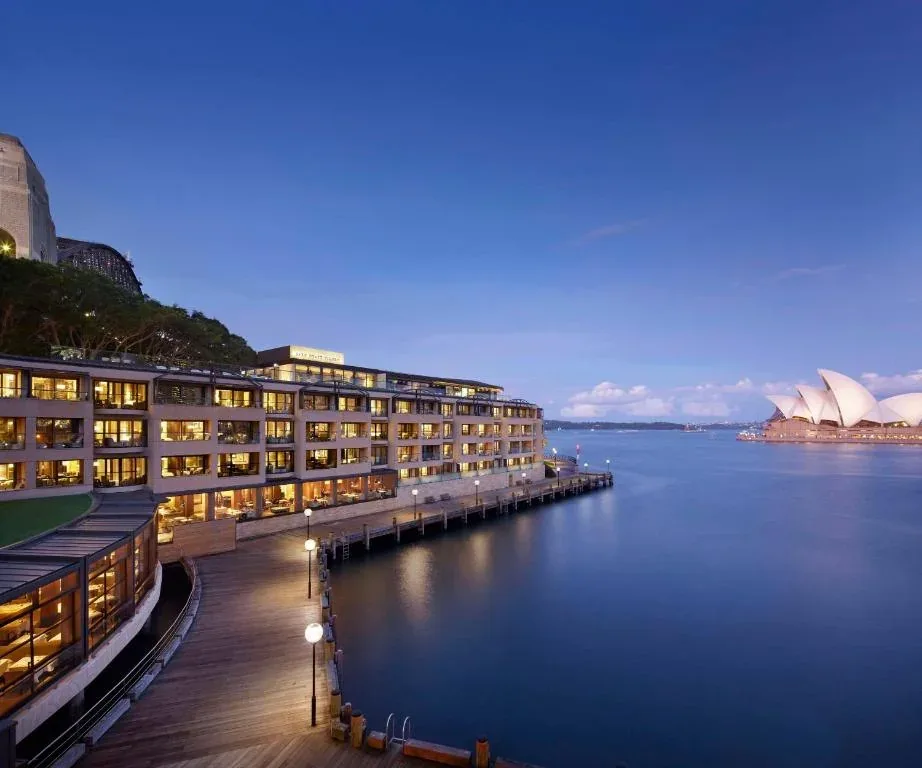
Two gallery bedroom examples show the Opera House through glass, but neither is labeled with a room category. Use the official names and view descriptions in the table; these photos do not identify an Opera View category or the room assigned to a guest. The exterior photo also does not show a room outlook.
Before you book
Before payment, write down the target you want to see and the minimum acceptable range; whether a private balcony is required; the full category name displayed for your dates; and the hotel’s exact wording about the outlook. Then check any event restrictions, whether the room number or placement is allocated later, whether your note is only a preference, and the cancellation terms. If something is essential, ask for a written answer that names the category and feature instead of asking generally for “a good view.”
After booking, compare the confirmation with the selected room name and rate. If the view term disappeared or the confirmation names a more general category, contact the seller before relying on it. Ask a question that can be answered precisely: which landmark is visible from this category, is the balcony included in this rate, or can event setup restrict some ground-floor sightlines? Keep the answer alongside the booking. A clear record helps you understand what the room category promises and what remains a request.
Official details and related guides
The two properties here serve different purposes in the guide. Paris shows how two one-bedroom categories can have the same stated area but different view names; Sydney shows how balcony and harbour wording can differ among room types and how event terms add limits. Neither example ranks the cities or recommends one hotel over the other. For a real reservation, use the official room text for your dates, then check that the final confirmation preserves the exact category you chose.
For room layouts and floor area, see the Paris room comparison. For event-date stay terms, see the Sydney New Year’s Eve room guide. For other room decisions, read the room-choice hub.
Official room and event terms
More hotels to consider
These additional hotels broaden the comparison of locations and rooms. Conditions established for the hotels above do not carry over to another property.
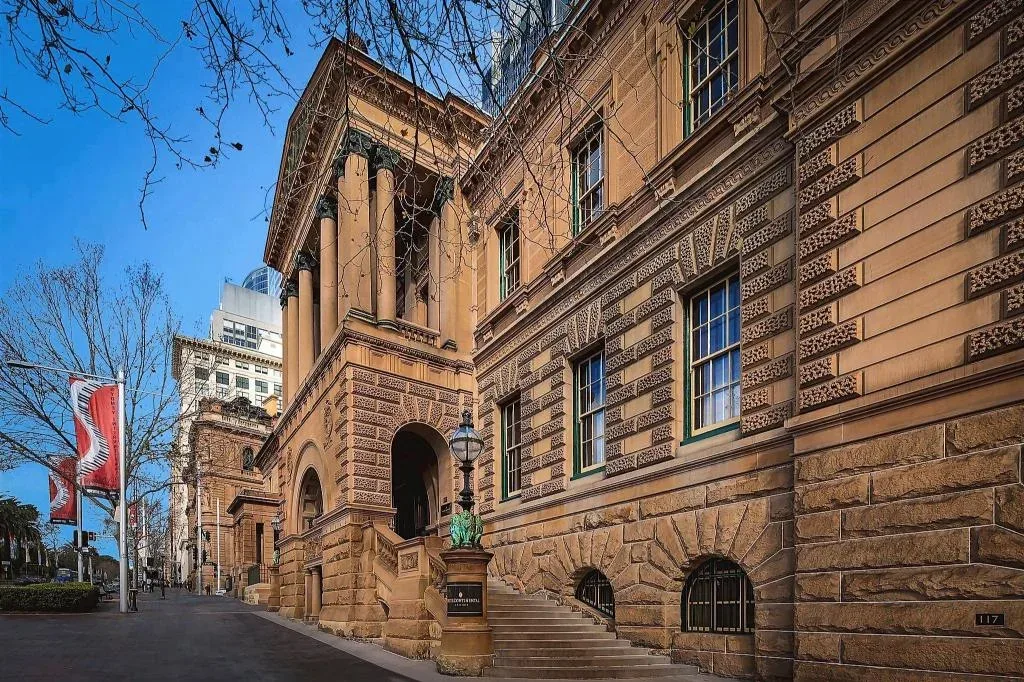
InterContinental Sydney By IHG
Location: 117 Macquarie Street.
Room example: 32 m² · “1 King Classic East Harbour View”. Enter your dates and party size, then match the exact room name on the booking page.
Before choosing, confirm: the exact view-category name, balcony and guaranteed versus requested features.
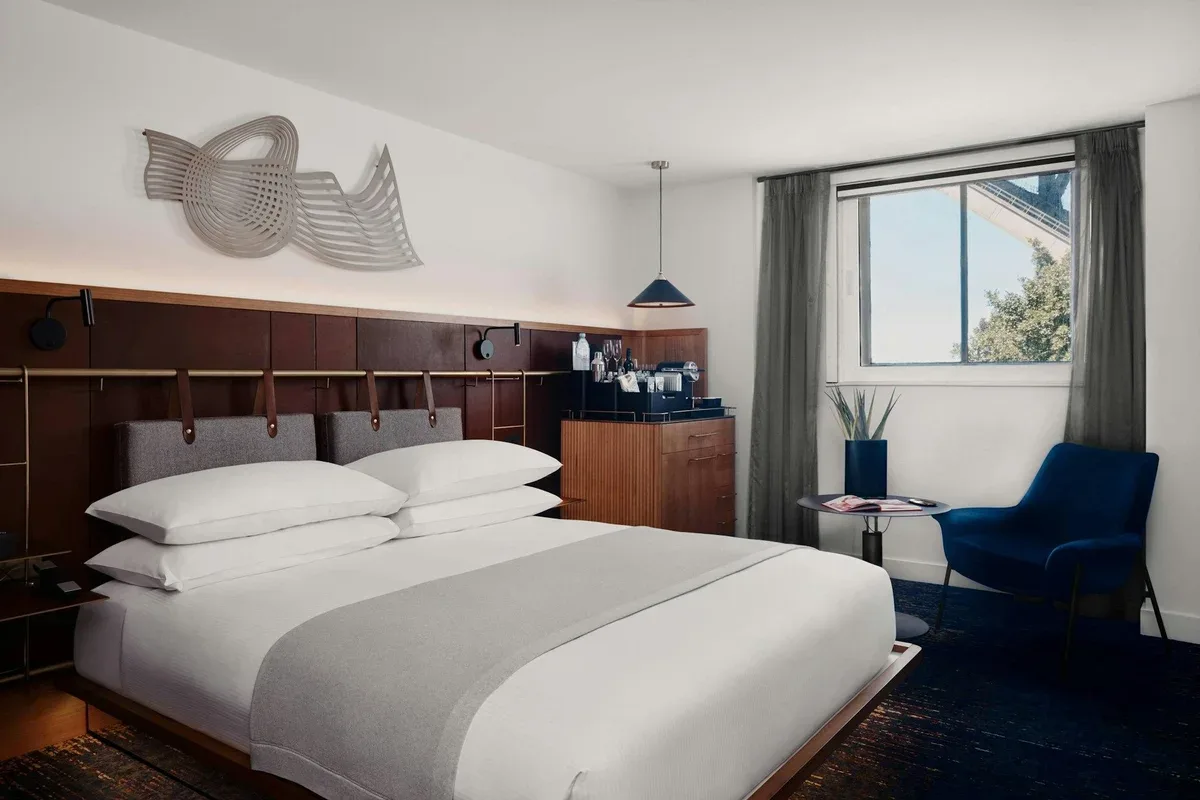
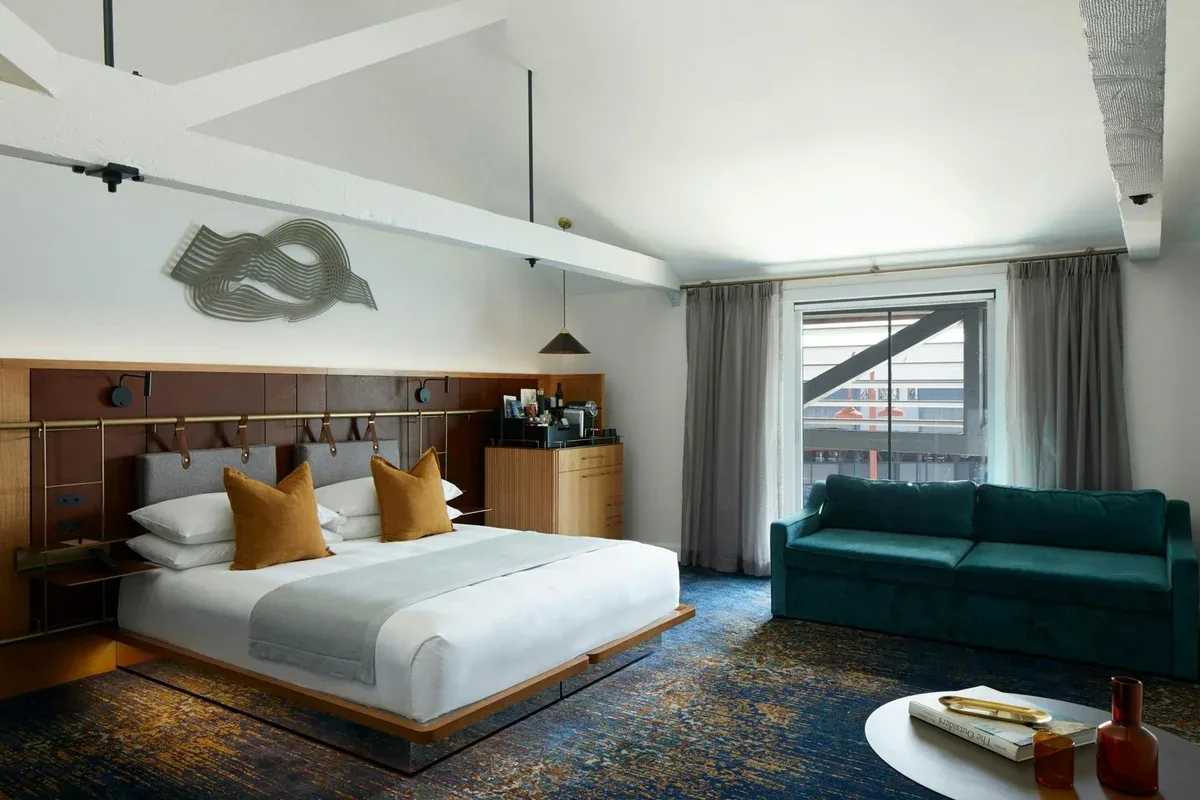
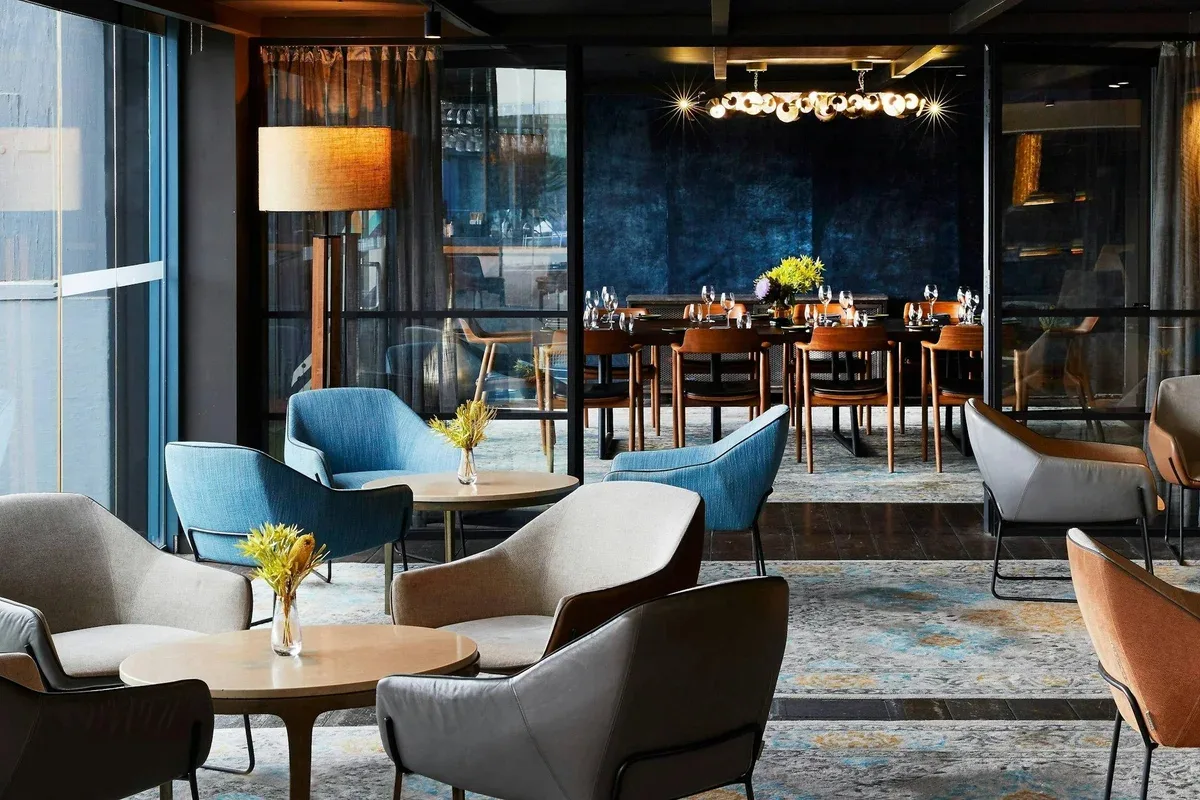
Pier One Sydney Harbour, Autograph Collection
Location: 11 Hickson Road, Walsh Bay.
Room example: 62 m² · “Water Suite, Suite, 1 King, Water view, Balcony”. Enter your dates and party size, then match the exact room name on the booking page.
Before choosing, confirm: the exact view-category name, balcony and guaranteed versus requested features.
Pier One Sydney Harbour, Autograph Collection · View rooms · Agoda ↗