Choose the room by the way your party will use it
A room search often starts with a number of guests, but that number does not finish the decision. A room can accept the whole party and still have fewer beds than people. A photograph can show a bed area that looks separate without showing a door. A larger floor-area figure can still leave little clear space once beds, a bathroom, and luggage are accounted for. Treat capacity, sleeping surfaces, bedroom separation, and usable living space as four separate questions, then compare the exact room type that the booking page offers for your dates.
A useful order is to enter the real party first, check the capacity of the named room, decide how many people need their own sleeping surface, and only then compare the room plan and its waking space. Put cancellation rules, meal terms, and mandatory charges beside the room that meets those needs. That order prevents a broad label such as “family room” or “suite” from doing the work of several specific facts. It also makes comparisons between hotels more useful: each property is answering the same set of questions, even if its room names differ.
Write down what would make the stay workable before looking at a gallery: who shares a bed, whether a door must close, whether anyone needs a desk, and where the largest bag will open. Separate a must-have from a preference. If the room listing leaves a must-have unclear, pause on that room and ask the property about the exact room name and rate. A request in a note is not a promise of a particular layout, and a room image is not proof that the pictured assignment will be yours.
| Check | Question it answers | What to inspect |
|---|---|---|
| Capacity | Can this exact room take our full party? | Selected room type and each guest's entered details |
| Beds | Where and how will each person sleep? | Number, type, and width of included beds; extra bedding terms |
| Bedroom | Can the sleeping room be closed off by a door? | Floor plan and the position of a real door |
| Living space | Where will we sit, move, and open luggage? | Area together with furniture, bathroom, and circulation |
Capacity is an entry condition, not a bed plan
The capacity shown for a room type is a starting check for whether the full party can stay under that property's terms. Enter adults and children accurately on the booking page; the result may affect which room types are offered. The capacity number still does not describe how people will sleep. “Sleeps three” does not necessarily mean three separate beds, and a room permitted for two does not tell you whether the two people share a double bed or have two singles. Read the capacity and bedding fields separately.
If children or infants are travelling, use the ages requested by that particular booking flow and read the property's own child and infant conditions. The treatment of a child, a cot request, breakfast, or a child sharing an existing bed can vary by property, room type, and rate. A rule seen on one hotel's page should not be carried over to another hotel. If a child may count toward the room limit or a cot is essential, have the hotel confirm that exact point for the selected room and dates before relying on it.
When contacting the property, state the room name as displayed, the dates, the number of adults and children, and the sleeping arrangement you need. A question such as “Can three people stay?” may produce only a capacity answer. A more useful request asks whether that room type accepts the stated party and whether a third bed is included, available for a charge, or only requested. Keep the answer with the booking conditions and check that the reservation you are about to make still shows the same room and party. A change of dates, occupancy, or rate plan can change the answer.
Booking sites may use capacity as a search filter while a hotel describes bedding in a different field. That is why a result card, a room name, or a total guest count should not be treated as a complete contract for sleeping arrangements. Open the detail for the selected room, review what is included, and use the property's official room information if a key detail is missing. If the provider and hotel pages appear inconsistent, do not resolve the difference by guessing: ask which information governs the room being sold.
Count beds and check their size separately
Start with the way your party expects to sleep. Are two adults comfortable sharing one bed, or does each person need a separate surface? Will a child share with an adult, or is a separate bed required? Once that is clear, check the number and type of beds listed for the exact room. Terms such as “twin,” “double,” and “triple” are useful labels, but they do not replace the room's actual bed list. Width matters too: two rooms with two beds can offer different sleeping arrangements if their stated widths differ.
Look for the distinction between beds included in the room and a sofa bed, rollaway, folding bed, or cot. The listing should say whether that item is included, whether a charge applies, and whether it is guaranteed or subject to confirmation. A note saying “available on request” describes a request path, not a reserved bed. If the extra surface is necessary for the party to sleep, do not book on the assumption that a request will be fulfilled; ask for confirmation tied to the room type and reservation.
Use a short checklist while comparing room pages: number of fixed beds; their stated type and dimensions; whether any pictured sofa converts into a bed; whether that conversion is in the official room description; and whether the price or occupancy changes when extra bedding is selected. Check that the same wording appears in the final room summary before payment. If a page uses a generic illustration, do not count what you see in the photograph unless the text for the selected room confirms it.
Even the phrase “three beds” needs context. It may refer to the named room's standard arrangement, but a different rate or room variant can have a different setup. The hotel examples below are deliberately tied to named room types and their current official entries. They show why the capacity number and bed count should be read together without treating either one as a substitute for the other.
A sleeping zone is not always a separate bedroom
A bed set behind a partial wall, a curtain, or furniture can look like a separate zone while remaining part of one open room. A separate bedroom means that the layout identifies another room for sleeping and that a door separates it from the adjoining space. Room labels such as “studio,” “suite,” “family,” or “one bedroom” are not enough by themselves to establish how a particular booking is divided. Inspect the floor plan and the description for the room being sold; look for the doorway and for which beds are on each side.
Think about the reason a door matters. One traveller may go to bed earlier while another reads or works; a child may sleep while adults stay up; or someone may want a private place to change. In those cases, a large open-plan room may not solve the problem even if it has more floor area. If everyone follows the same schedule and uses the room mainly to sleep, bed separation or a clear walking route may matter more than a door. Defining the need first keeps the search from turning into a vague pursuit of a “bigger” room.
Photos help you understand a room, but they can show a different room category, a staged angle, or only one part of a layout. Use them to formulate a question, then verify the answer in the room description or with the property. Confirm whether the door closes, whether it belongs to the booked unit rather than a connecting-room option, and whether the stated bed arrangement applies to that same room. A sliding panel or visual divider should not be described as a closing bedroom door unless the hotel says that is what it is.
If you are comparing an aparthotel in Paris, the distinction between a studio and a one-bedroom unit is the next focused question. The Paris studio-versus-one-bedroom comparison examines those room types as a separate city-specific decision. It is not evidence that Paris properties follow one universal layout, and it does not describe the Shinjuku hotels below. Carry the same door-and-plan check into that comparison rather than inferring the answer from the room name.
Judge the space left for the hours you are awake
Floor area is easy to compare, but it does not tell you how much usable space remains. Beds, a desk, storage, a bathroom, doors, and the route between them all occupy part of the room. Two rooms with the same area can feel and function differently because the shape and furniture layout differ. Ask what you will actually do in the room: open suitcases, eat, sit together, work, or move around while someone is sleeping. Then look for evidence about those activities rather than treating the larger number as an automatic comfort score.
For luggage, consider how many bags need to be open at once and whether they can sit without blocking the bed, entry, or bathroom. For a longer stay, check for a place to sit and a surface for routine items. If work is part of the trip, confirm that the selected room includes a usable desk and that the description says so; a table visible in another room photo is not enough. The right space is the layout that supports your actual routine, not necessarily the one with the most generous headline area.
Bathroom arrangement can also affect the morning routine. When several people get ready at once, the location of the bathroom door, the washbasin, and the toilet may matter as much as the overall floor area. A property may describe a separate bath and toilet for one room type, while another category has a different arrangement. Keep the claim attached to its named room. Do not generalize one room's bathroom layout to every room at the hotel.
For a short stay spent mostly outside, a compact room may meet the real need if the sleeping surfaces and circulation are adequate. For a longer stay or a party with different schedules, a separate sitting area may become more valuable. Neither conclusion can be made from square metres alone. Compare the plan, the furniture, and the conditions for the exact room, and decide which trade-off you are willing to accept. A clear list of must-haves makes a modest room easier to assess and a large room easier to question.
Shinjuku Prince Hotel: a compact twin for two
The official room list for Shinjuku Prince Hotel describes its Standard Twin as 15.3 m², with two beds 97 cm wide and a capacity of two guests. That is a specific example where the listed capacity and two separate beds align for a pair who want their own sleeping surface. It is also a compact area figure, so a traveller who expects generous room for open luggage or time spent sitting should inspect the room details and images before deciding that the arrangement is enough. The measurements do not by themselves show the clear floor space around the furniture.

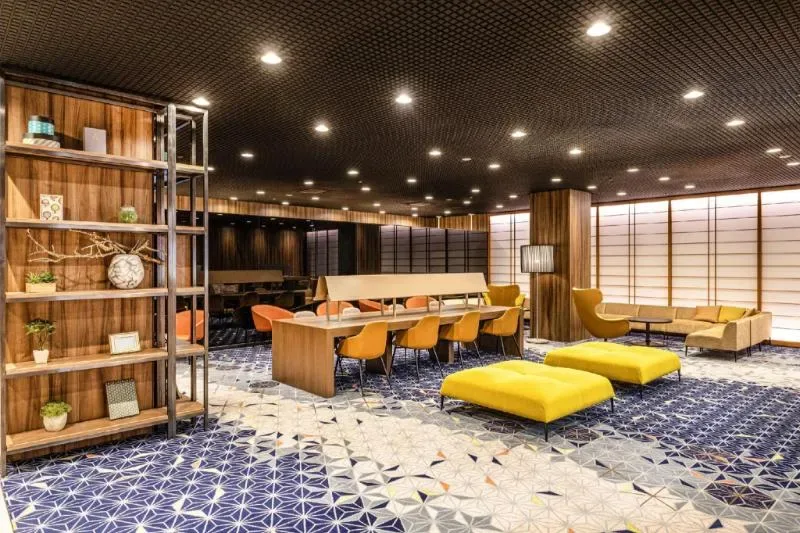
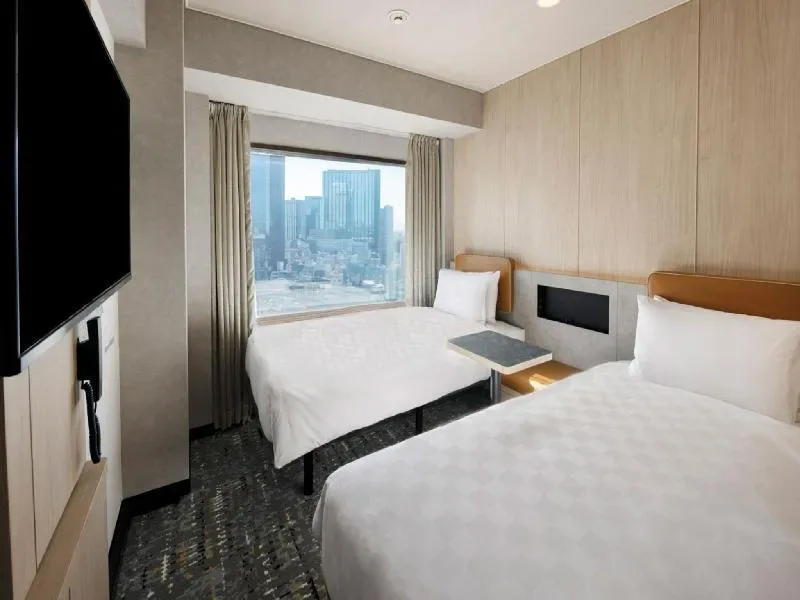
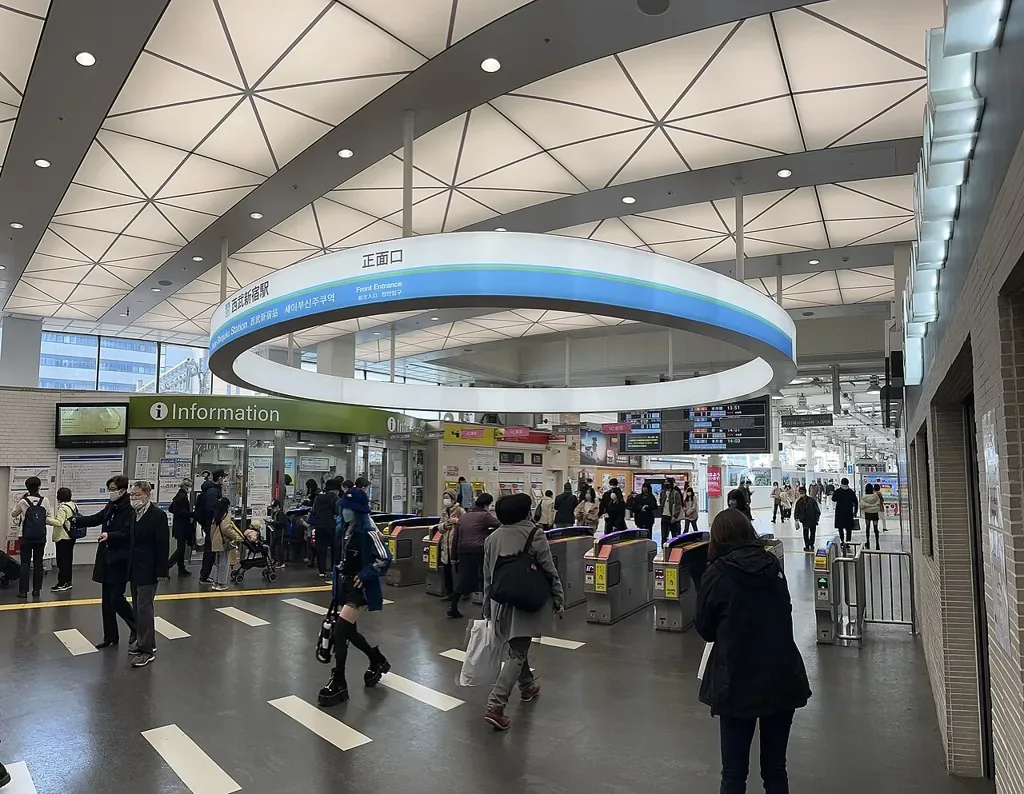
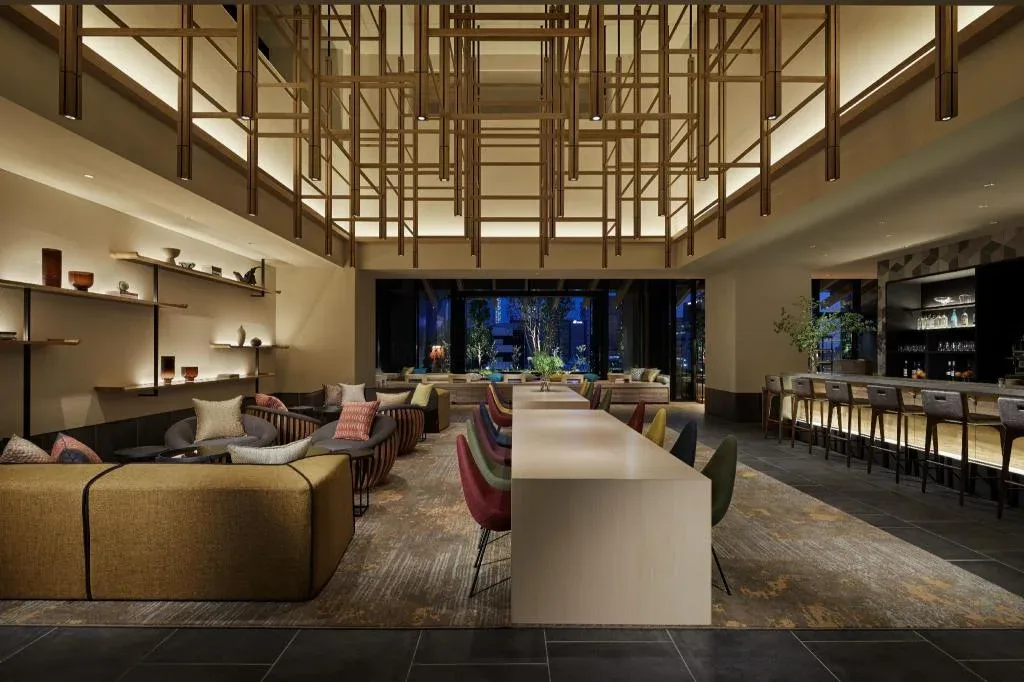
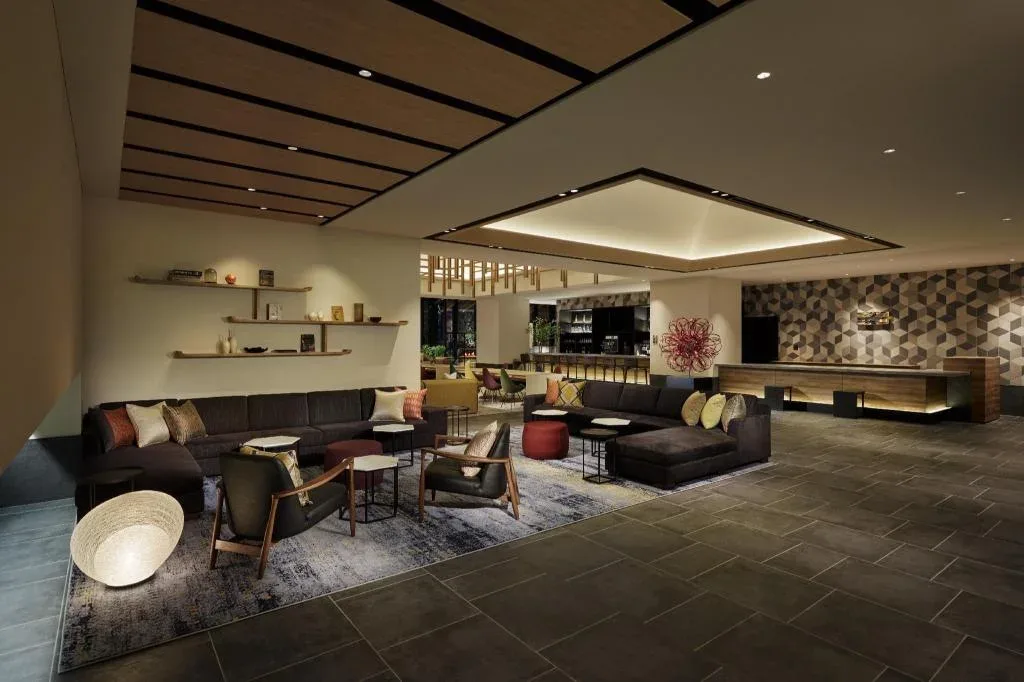
The supplied hotel gallery examples show the building, lobby, and a Standard Twin room image. They are useful for orientation, but they do not promise a particular floor, view, assignment, or exact configuration on arrival. The station-gate photograph is a dated public image of Seibu-Shinjuku Station, not a route assessment. Check current official access directions for the arrival you plan to make, especially if your route involves luggage or a transfer. This room comparison addresses sleeping and usable space, not the best railway route for every itinerary.
This room is worth comparing when two guests want separate beds and the named Standard Twin's capacity fits their party. It is not the right evidence for a third guest, a door-separated bedroom, or a larger sitting area. If any of those are essential, search for another named room type and verify its current capacity and bedding rather than stretching this entry beyond what it says. A photograph of a different category cannot fill in those missing facts.
Keep the final check tied to the booking you will make: confirm that the room is still called Standard Twin, enter two guests, read the two-bed details, and compare the cancellation and payment terms for the selected rate. If a third person or a specific layout is involved, ask the property about that exact room and dates instead of relying on a general hotel description. These steps make the example actionable without implying that every Prince hotel or every Shinjuku room has the same dimensions.
Hotel Gracery Shinjuku: compare two beds with three
The official Hotel Gracery Shinjuku room list gives its Standard Twin as 24 m², with two 120 cm-wide beds and capacity for two. The same list describes a separate bathroom and toilet for that room type. Its Triple Room is listed as 28 m², with three 110 cm-wide beds and capacity for three; the hotel describes those as standard single beds rather than extra beds. This gives a more explicit three-person bed comparison than a capacity figure alone, but the details belong only to these named room types at this property.

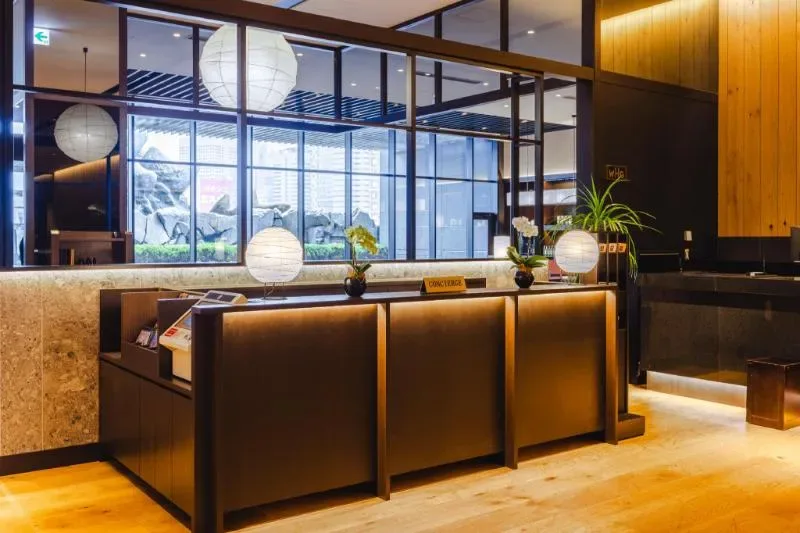
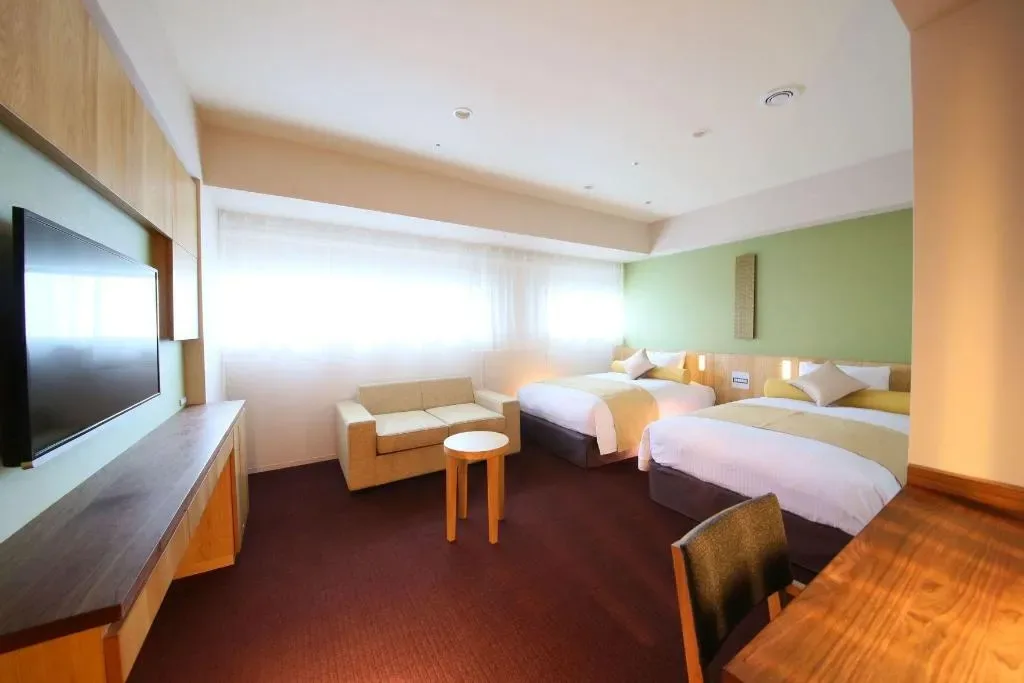

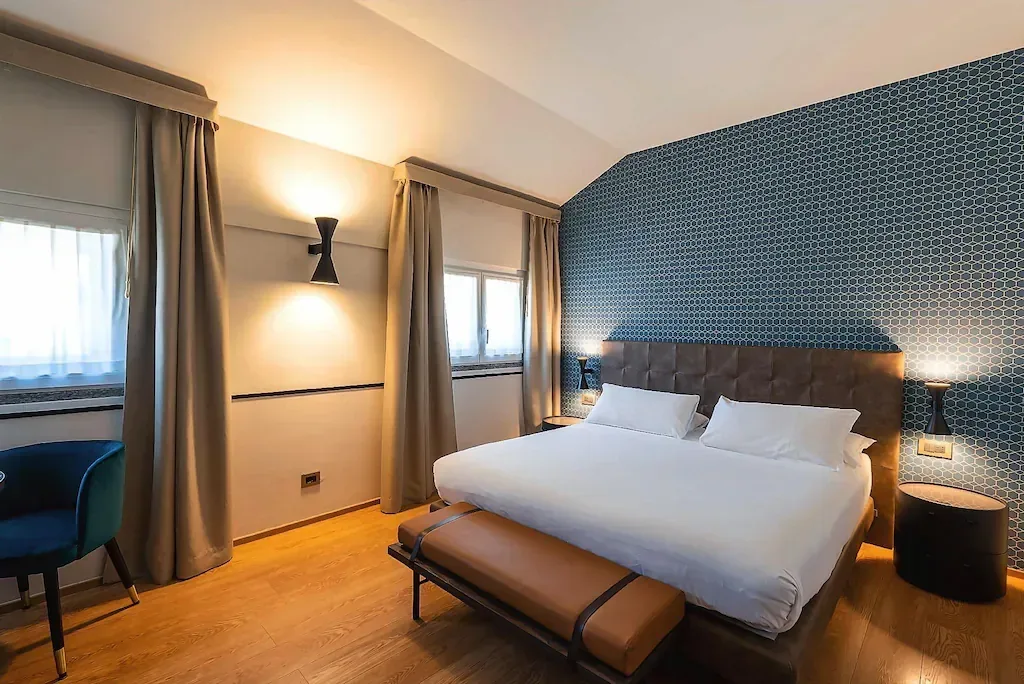
The building, lobby, and guest-room images come from retained supplier-gallery records. The room image shows one example with two beds and a window-side seat; it should not be used to identify the Triple Room or infer a floor plan that the hotel has not stated. The Godzilla Street image is a 2019 public photograph of the surrounding district, not a current street report or a measure of how long your walk will take. Use current hotel directions for access and the official room entry for bedding.
For three guests who each need a bed, the named Triple Room is the relevant room to inspect because the current official listing pairs capacity three with three stated beds. Confirm that the booking result still selects that exact category and that the party details are correct. For two guests, compare the Standard Twin with the Prince Standard Twin using both bed width and area, rather than assuming that either hotel is better from one number. The 24 m² and 28 m² figures describe room area, not a guaranteed amount of clear floor, seating, or luggage space.
That distinction also prevents an overbroad conclusion about the hotel. The separate bath-and-toilet description belongs to the Standard Twin entry; it is not a promise about every room. The three standard beds belong to the listed Triple Room; they do not define the room names used by other Gracery properties. If the room needs a door between sleeping and sitting areas, check that question independently because the capacity and bed list do not answer it.
Before booking, compare the exact room name, party size, included bedding, and rate conditions in the final summary. If the room page and booking channel display different terms, ask the property which applies to the reservation. When a bed or a closed bedroom door is essential, keep written confirmation with the room and dates instead of relying on a general request field. These checks help distinguish an acceptable three-bed plan from a room that merely allows three guests.
Match the next comparison to the question you still have
The two Shinjuku examples show why capacity, bed count, and usable space are related but not interchangeable. The Prince Standard Twin is listed for two people with two 97 cm-wide beds in 15.3 m². Gracery's Standard Twin is listed for two people with two 120 cm-wide beds in 24 m², while its Triple Room is listed for three people with three 110 cm-wide beds in 28 m². These are official facts for named rooms at two hotels; they do not create a rule for how another hotel uses “twin,” “triple,” or “family” in its room names.
Before you leave a booking page, review the exact date, room type, and party on the same screen. Confirm the allowed capacity; the count, kind, and width of included beds; any charge or condition for extra bedding; and whether a door closes off a separate bedroom. Then read the rate terms for cancellation, payment, meals, taxes, and mandatory fees. If you are comparing channels, use the same dates, party, room, and rate conditions so the comparison does not silently change what is included.
If the unresolved question is whether a sleeping area is a true separate bedroom, continue to the Paris aparthotel studio-versus-one-bedroom comparison. It looks at that distinction in its own property context rather than treating a room label as proof. The city-specific room examples there should be checked on their own terms; they do not describe the Shinjuku layouts.
Once the room layout is clear, the next concern may be a different comfort condition. The Vienna Parkhotel Schönbrunn room-temperature guide addresses that narrower question. Its subject is a Vienna property, so use it as a separate follow-up, not as evidence about climate controls in the two Shinjuku hotels.

For a broader look at location and the two Shinjuku hotels, the Shinjuku Prince Hotel and Hotel Gracery comparison is the next step. This guide is limited to how to read capacity, beds, bedroom separation, and waking space; it does not rank all hotels in the district or assess current prices and availability. Those details change with dates and the rate displayed, so check the live booking terms for the reservation you are considering.
Official room information and image credits
More hotels to consider
These additional hotels broaden the comparison of locations and rooms. Conditions established for the hotels above do not carry over to another property.
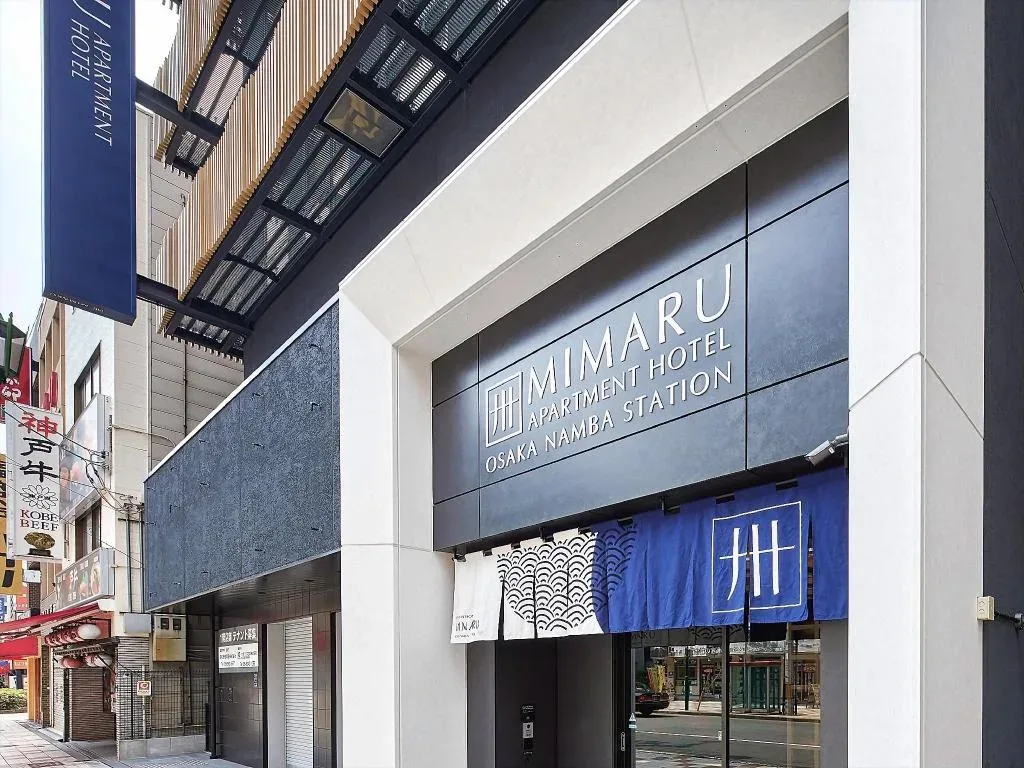
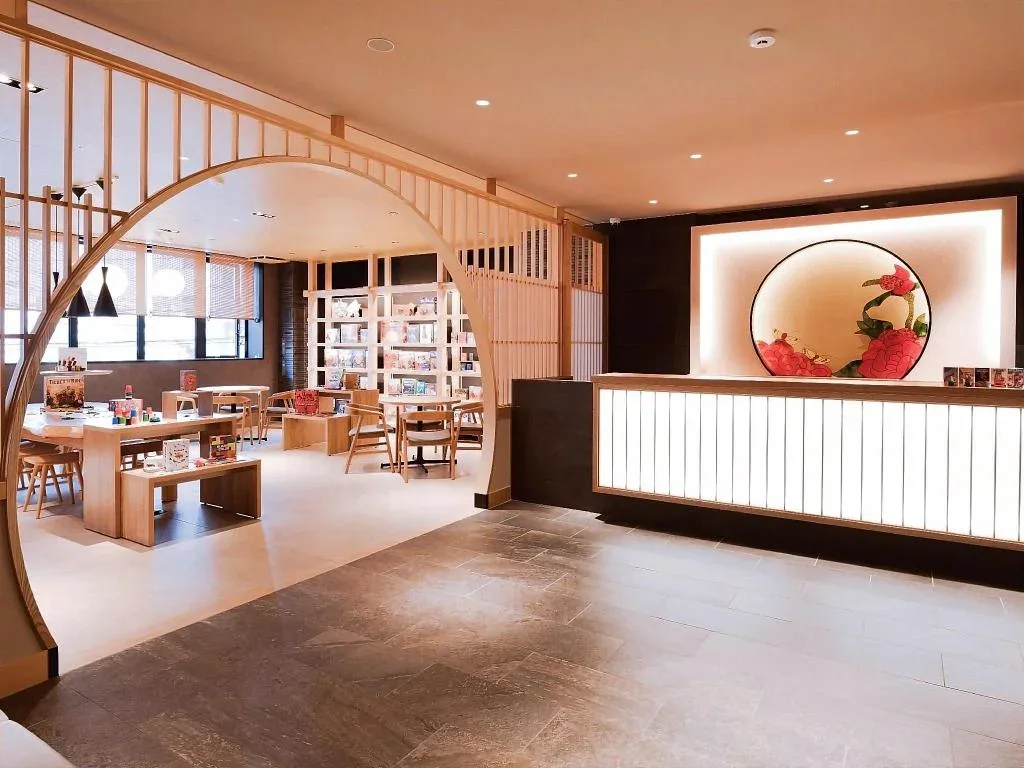
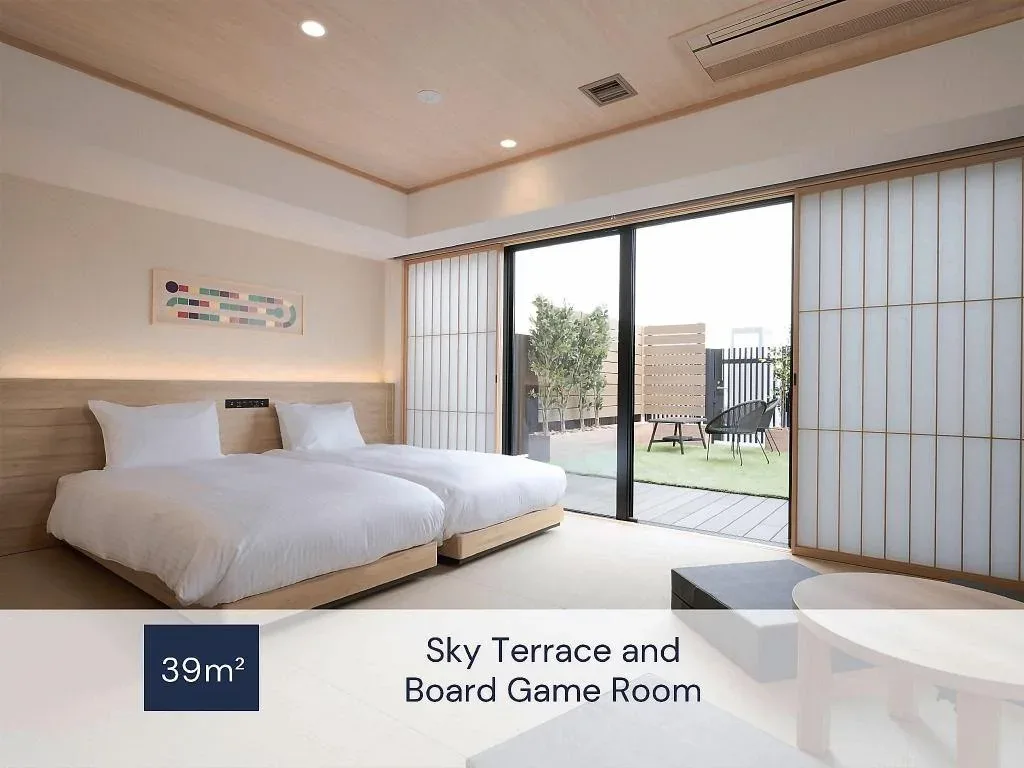
MIMARU Osaka Namba Station
Location: 3-6-24 Nipponbashi, Naniwa-ku.
Room example: 35 m² · “Family Apartment”. Enter your dates and party size, then match the exact room name on the booking page.
Before choosing, confirm: occupancy, bed count, bedroom separation and usable luggage space.
Hyatt House Kanazawa
Location: 1-5-2 Hirooka.
Room example: 81 m² · “2-Bedroom Kitchen Suite”. Enter your dates and party size, then match the exact room name on the booking page.
Before choosing, confirm: occupancy, bed count, bedroom separation and usable luggage space.